What I’m Reading: Brother

From the book jacket:

An intensely beautiful, searingly powerful, tightly constructed novel, Brother explores questions of masculinity, family, race, and identity as they are played out in a Scarborough housing complex during the sweltering heat and simmering violence of the summer of 1991. 

With shimmering prose and mesmerizing precision, David Chariandy takes us inside the lives of Michael and Francis. They are the sons of Trinidadian immigrants, their father has disappeared and their mother works double, sometimes triple shifts so her boys might fulfill the elusive promise of their adopted home. 

Coming of age in The Park, a cluster of town houses and leaning concrete towers in the disparaged outskirts of a sprawling city, Michael and Francis battle against the careless prejudices and low expectations that confront them as young men of black and brown ancestry — teachers stream them into general classes; shopkeepers see them only as thieves; and strangers quicken their pace when the brothers are behind them. Always Michael and Francis escape into the cool air of the Rouge Valley, a scar of green wilderness that cuts through their neighbourhood, where they are free to imagine better lives for themselves. 

Propelled by the pulsing beats and styles of hip hop, Francis, the older of the two brothers, dreams of a future in music. Michael’s dreams are of Aisha, the smartest girl in their high school whose own eyes are firmly set on a life elsewhere. But the bright hopes of all three are violently, irrevocably thwarted by a tragic shooting, and the police crackdown and suffocating suspicion that follow.

With devastating emotional force David Chariandy, a unique and exciting voice in Canadian literature, crafts a heartbreaking and timely story about the profound love that exists between brothers and the senseless loss of lives cut short with the shot of a gun.

My review:

This novella received a lot of rave reviews on Goodreads, but I personally wasn’t quite as captivated by it as most other readers were. That’s not to say that I didn’t find the message to be important, it still is and is very relevant to this day.

It’s disappointing to know that even though this story takes place in the early 90’s, the issues that society was facing then are still happening now. If anything, Brother is an important read to remember the struggles people face when they don’t quite fit in, even in Canada where we’re hailed as being an all-accepting country. Racism is very much a real thing here.

I truly felt for Francis and Michael, with Francis being thrown into becoming the man of the house at such a young age, and Michael still trying to just be a kid but also gain respect amongst his peers. Perhaps the reason though for my lower rating for Brother is because I desperately wanted more.

On the other hand, I wonder if Chariandy purposely made this a quick read that had brief subplots to reflect what happens in reality. Not every avenue pans out in real life; there are a lot of situations where “that’s that” and you don’t get to elaborate or know more. Either way, I still think Brothers is a decent quick read.

My rating: ★★★½/5
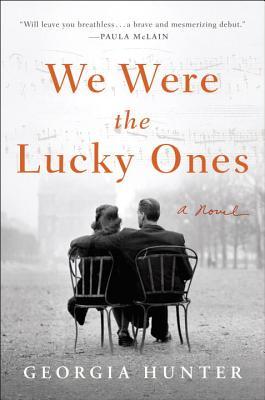
What I’m Reading: We Were the Lucky Ones

From the book jacket:

It is the spring of 1939 and three generations of the Kurc family are doing their best to live normal lives, even as the shadow of war grows closer. The talk around the family Seder table is of new babies and budding romance, not of the increasing hardships threatening Jews in their hometown of Radom, Poland. But soon the horrors overtaking Europe will become inescapable and the Kurcs will be flung to the far corners of the world, each desperately trying to navigate his or her own path to safety. 

As one sibling is forced into exile, another attempts to flee the continent, while others struggle to escape certain death, either by working grueling hours on empty stomachs in the factories of the ghetto or by hiding as gentiles in plain sight. Driven by an unwavering will to survive and by the fear that they may never see one another again, the Kurcs must rely on hope, ingenuity, and inner strength to persevere. 

An extraordinary, propulsive novel, We Were the Lucky Ones demonstrates how in the face of the twentieth century’s darkest moment, the human spirit can endure and even thrive.

My review:

Up until I read the author’s notes about the story, I was leaning hard towards giving We Were the Lucky Ones four stars. There was a LOT going on; between the number of characters, the numerous events, and variety of locations, it was hard to keep track at times.

That’s not to say that I didn’t admire the characters’ resilience during such a terrifying time in their lives. I found myself reading page after page just to find out what would happen to each of them. I don’t often find myself tearing up over books but there were definitely moments in this one that made me reach for the tissues, not out of sorrow but joy. I definitely wanted the world for the Kurcs but knowing the harrowing time I didn’t ever get my hopes up and always prepared my heart for the worst.

At times I found it all to be a little unbelievable, I mean, the title of the book kind of gives everything away, but then I read the author’s notes and my opinion was changed. It definitely deserved one more star, perhaps not for the writing but for the amazing journey Hunter took in collecting every bit and piece of information to put the story together. We Are the Lucky Ones is truly a family story worth passing down through every generation.

My rating: ★★★★★/5

What I’m Reading: My (not so) Perfect Life

From the book jacket:

Everywhere Katie Brenner looks, someone else is living the life she longs for, particularly her boss, Demeter Farlowe. Demeter is brilliant and creative, lives with her perfect family in a posh townhouse, and wears the coolest clothes. Katie’s life, meanwhile, is a daily struggle–from her dismal rental to her oddball flatmates to the tense office politics she’s trying to negotiate. No wonder Katie takes refuge in not-quite-true Instagram posts, especially as she’s desperate to make her dad proud.

Then, just as she’s finding her feet–not to mention a possible new romance–the worst happens. Demeter fires Katie. Shattered but determined to stay positive, Katie retreats to her family’s farm in Somerset to help them set up a vacation business. London has never seemed so far away–until Demeter unexpectedly turns up as a guest. Secrets are spilled and relationships rejiggered, and as the stakes for Katie’s future get higher, she must question her own assumptions about what makes for a truly meaningful life.

My review:

I have a pile of heavy/emotional books lined up, so I figured this Sophie Kinsella book would a great little read in between. While I finishing it, it was only because I was curious to see if it could get any more ridiculous. (Spoiler: It does.)

The plot vaguely reminded me of The Devil Wears Prada in that Katie/Cat/Kath/Whatever hates her boss and she’s trying to make it in her industry. But something tells me that Kinsella tried just a little too hard to write a ridiculous movie script instead of a light-hearted novel. The whole scene when Demeter is at the farm is just over the top and too much.

I get that the main idea of the story is to get readers to remember that despite the fact that someone’s life may seem picture-perfect in life, there’s always so much more that is untold. Heck, even I remind myself that despite of annoying perfect someone may seem to be, they still have big, stinky poos. No one has their shit together 100% of the time – ever – and don’t forget that.

So, while the message of the book is indeed an important one, it really could have been tackled in a less-than-absurd way.

My rating: ★★/5